What Should My Tyre Pressure Be? Finding the Right Figure and Checking It Properly
Where to find your car's correct tyre pressure, why registration lookups can be wrong, normal and full-load figures, and how to check pressures cold.
Updated 20 November 2026 · 13 min read · By FindMechanic
Need a tyre shop in London?
Compare tyre shops near you by Google rating and number of reviews, then call them direct. Free, no sign-up.
The correct tyre pressure for your car is usually printed on a sticker inside the driver’s door frame. Not necessarily on a website, and not from a registration lookup that can’t confirm which tyres are fitted to your car today.
Open the driver’s door and check the frame where it shuts. If the sticker isn’t there, look inside the fuel filler flap or in the owner’s handbook.
You’ll probably find more than one set of figures. That’s normal. The trick is knowing which applies to your tyres, how much weight you’re carrying, and when to check the pressure.
Where to Find Your Car’s Correct Tyre Pressure
Your car’s correct tyre pressure is usually listed in three places: the driver’s door frame, inside the fuel filler flap or in the owner’s handbook.
The manufacturer’s recommendation is the figure to follow because it accounts for the vehicle’s approved tyre and wheel combinations.
1. Inside the driver’s door frame
Open the driver’s door and look for a sticker on the door pillar or the edge of the door itself.
The label may show:
- Recommended front tyre pressure.
- Recommended rear tyre pressure.
- Different figures for normal and fully loaded driving.
- Pressures for different approved tyre sizes.
- Measurements in psi, bar or kPa.
Don’t assume all four tyres need the same pressure.
Some manufacturers specify different front and rear pressures because the axles carry different loads.
Check both figures before reaching for the air pump.
2. Inside the fuel filler flap
Some manufacturers place the tyre pressure label inside the fuel filler flap.
Open it and look for the recommended pressures. You may find separate figures for different tyre sizes or loading conditions.
Check that you’re reading the correct row rather than selecting the first number you see.
3. In the owner’s handbook
If the stickers are missing or unreadable, check the handbook. Some cars also display tyre pressure information on the glovebox lid or through the manufacturer’s vehicle information system.
If you still can’t find the information, contact the vehicle manufacturer or a qualified tyre specialist.
Michelin explains these locations in its guide to Michelin on finding the right tyre pressure.
One common mistake is using the pressure printed on the tyre sidewall.
That marking may indicate a maximum inflation pressure associated with the tyre’s load rating. It isn’t the manufacturer’s recommended everyday running pressure for your car.
Why There’s No Reliable Tyre Pressure Lookup by Registration
A tyre pressure lookup by registration can suggest a pressure for your vehicle, but it cannot always confirm the correct figure for the tyres currently fitted.
Typing your number plate into a website is convenient. The problem is that a registration search retrieves information from a database, which may not reflect your car’s exact wheels, tyres or current loading conditions.
That’s why two tyre pressure lookup websites can sometimes give different answers.
Your tyre size might have changed
Many cars are available with several manufacturer-approved wheel and tyre combinations.
A basic trim level might leave the factory with smaller wheels, while another version has larger wheels and lower-profile tyres.
An owner may also have changed the wheels since the car was manufactured.
Different approved tyre and wheel combinations can have different recommended pressures.
The registration alone doesn’t necessarily identify what’s fitted today.
Before searching for pressures, read the tyre size on the sidewall.
If you’re unfamiliar with the markings, our guide explains how to read your tyre size off the sidewall.
Different trim levels can have different recommendations
Two cars with the same model name and registration year may have different engines, wheel options or axle loads.
A general lookup might show one pressure recommendation even though the manufacturer provides several.
That doesn’t mean every registration lookup is wrong. It means the result needs checking against information for your actual vehicle.
The database doesn’t know how much you’re carrying
Your recommended pressure may also change depending on vehicle load.
A car carrying one driver and a shopping bag isn’t loaded like one carrying four adults and several suitcases.
Manufacturers often provide separate pressure recommendations for these conditions.
A registration lookup can’t know which applies to your journey.
So which figure should you trust?
Start with your vehicle’s tyre pressure label and match the recommendation to the tyre size and loading conditions.
If the sticker is missing, use the owner’s handbook or obtain vehicle-specific information from the manufacturer.
If the tyres or wheels have been changed to a non-standard specification, seek professional advice rather than guessing.
A registration lookup can help when shopping for replacement tyres. Finding the correct inflation pressure is a separate job and should be based on your vehicle manufacturer’s recommendations.
Normal Load and Full Load: The Two Figures Nobody Uses
Many cars have two sets of recommended tyre pressures: one for normal driving and another for carrying a heavier load.
Both figures can be correct. The difference is how much weight the vehicle is carrying.
Normal load pressures
The normal-load figures are intended for the everyday loading conditions specified by the manufacturer.
Think of a commute to work, a short drive across town or a shopping trip with one or two people in the car.
For these journeys, the normal-load recommendation is generally the relevant one.
However, check the symbols or descriptions on your vehicle’s sticker because manufacturers don’t all present their recommendations in the same way.
Full-load pressures
Full-load pressures are intended for the heavier loading conditions covered by the manufacturer.
Imagine you’re heading to the airport with four passengers and a boot packed with suitcases.
That’s when you should check the fully loaded figures rather than automatically using your everyday settings.
The recommended pressures may be higher, particularly at the rear, although the adjustment depends on the vehicle.
Make any necessary changes before setting off, while the tyres are cold.
When would you increase tyre pressure?
You would normally switch to the manufacturer’s loaded-pressure recommendation when:
- Carrying several passengers and substantial luggage.
- Preparing for a holiday with a heavily loaded car.
- Towing, where the manufacturer specifies different pressures.
- Carrying heavy equipment within the vehicle’s permitted load limits.
Don’t simply add a few psi because the car feels heavy.
Use the manufacturer’s recommended pressures for the loading condition, and don’t exceed the vehicle’s maximum permitted weight.
Some labels also show alternative tyre sizes or special operating conditions. Check the tyre size and corresponding pressure figures carefully.
When the additional load is removed, check whether the manufacturer recommends returning to the normal-load pressures.
From FindMechanic's listings
Top-rated tyre shops in London
Ranked by Google rating weighted by the number of reviews. Featured listings are labelled.


How to Check Your Tyre Pressure Properly
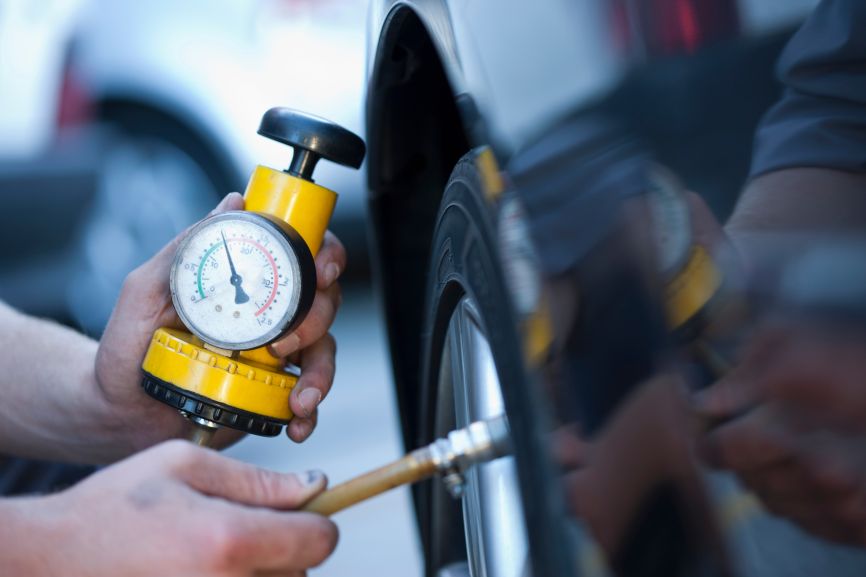
The most accurate way to check tyre pressure is with a reliable gauge while the tyres are cold.
You can use a handheld digital gauge, a manual pressure gauge or an air compressor with a suitable pressure display.
Step 1: Find your recommended pressure
Read the manufacturer’s sticker and identify the correct pressures for your front and rear tyres.
Check whether you’re using the normal-load or full-load figures.
Don’t use a generic pressure recommendation or copy the reading from another car.
Step 2: Check the tyres when they’re cold
Ideally, check your tyres before driving, after the car has been parked for at least three hours.
A tyre that has travelled only a very short distance at low speed may still be considered cold, but checking before your journey is the better option.
Driving generates heat, which increases the tyre’s measured pressure.
For example, if you drive for 20 minutes and stop at a petrol station, your tyres may read higher than they would after cooling.
Releasing air from those warm tyres until they match the manufacturer’s cold recommendation can leave them under-inflated later.
Step 3: Remove the valve cap
Unscrew the valve cap and keep it somewhere safe.
Check that the valve isn’t visibly damaged or obstructed by dirt.
Step 4: Attach the pressure gauge
Press the gauge firmly and squarely onto the valve.
A brief hiss is normal when connecting it. If air continues escaping, reposition the gauge to get a proper seal.
Read the pressure displayed.
Step 5: Add or release air as needed
If a cold tyre is below the recommended pressure, use a suitable compressor to add air.
Check the reading again.
If you’ve added too much air, release a small amount and recheck until you reach the manufacturer’s recommended cold pressure.
Step 6: Repeat for every tyre
Check all four tyres individually, even if they look properly inflated.
Replace the valve caps afterwards to help keep dirt and moisture away from the valves.
If your car has a spare wheel, check that too.
Temporary space-saver spares can require substantially higher pressures than normal road tyres. Always follow the pressure marked for the spare or specified in the vehicle handbook.
How to check tyre pressure at a petrol station
Petrol station air lines are useful, but there’s one problem: you’ve probably driven there.
The longer the journey, the more likely the tyres are to have warmed up.
For the most accurate result, check the tyres at home before driving.
Otherwise, choose a nearby air line and follow the manufacturer’s guidance for checking or adjusting warm tyres.
Don’t release air from a warm tyre simply because the reading is higher than the cold recommendation.
If you adjust the pressures while the tyres are warm, check them again after they’ve cooled and make any necessary corrections.
While you’re beside the wheel, take another moment to inspect the tread. Our guide explains how to check your tread depth while you’re there.
How Often Should You Check Your Tyre Pressure?
Check your tyre pressures at least once a month and before long journeys. The UK Highway Code advises checking weekly, which is a sensible routine to follow if you can.
You should also check before carrying a heavy load, towing or after a significant pothole or kerb impact.
Why does regular checking matter?
Tyres naturally lose small amounts of air even when there’s no puncture.
Michelin estimates that tyres typically lose around 0.07 bar, approximately 1 psi, per month through natural pressure loss.
A tyre that hasn’t been checked since spring could therefore be noticeably under-inflated by autumn.
Temperature changes can make the difference greater.
Don’t wait until a tyre looks flat. A modern tyre can be under-inflated without showing an obvious change in appearance.
A useful routine is to:
- Check the pressures before your first journey of the day.
- Make a pressure check part of your weekly vehicle maintenance.
- Check before motorway journeys or holidays.
- Check more frequently when temperatures change substantially.
- Investigate any tyre that repeatedly loses pressure.
If one tyre loses air much faster than the others, don’t keep topping it up indefinitely.
A puncture, damaged valve or leaking wheel rim could be responsible. Have the tyre inspected to identify the cause.
Cold Weather and Your Tyre Pressure
Tyre pressure drops by roughly 1 to 2 psi for every 10°C fall in temperature, according to Continental.
That’s why autumn and winter are particularly good times to check your tyres.
Imagine you last checked the pressures on a warm September afternoon. By November, the temperature may have fallen considerably.
Even without a puncture, the cold pressure reading could be a couple of psi lower.
This happens because the pressure of the air inside the tyre changes with temperature.
Colder air produces less pressure when the tyre’s volume remains approximately the same.
Continental explains this relationship in its guidance on Continental on tyre pressure in winter.
Should you add extra air in winter?
You should maintain the manufacturer’s recommended cold tyre pressure during winter, rather than deliberately over-inflating the tyres to compensate for colder weather.
Check the pressures while the tyres are cold and adjust them to the correct figure for your vehicle and load.
If the cold weather has caused the pressure to fall below the recommendation, add enough air to restore it.
During winter, Continental recommends checking approximately every two weeks. More frequent checks are sensible if you notice repeated pressure loss.
A sudden temperature drop can also coincide with a dashboard warning, so we’ve covered what the tyre pressure warning light actually means in a separate guide.
PSI, Bar and kPa: What Do the Numbers Mean?
PSI, bar and kPa are three units used to measure tyre pressure. They describe the same measurement, so you can convert between them.
In the UK, many tyre pressure gauges display psi, while some manufacturers list pressures in bar or kilopascals (kPa).
Here’s how the measurements compare:
| Unit | Conversion |
|---|---|
| 1 bar | Approximately 14.5 psi |
| 1 bar | 100 kPa |
| 1 psi | Approximately 6.895 kPa |
| 1 psi | Approximately 0.06895 bar |
For example, 2.2 bar equals approximately 31.9 psi or 220 kPa.
That’s a conversion example only, not a recommended pressure for any particular car.
If your vehicle’s sticker uses bar but your petrol station compressor displays psi, convert the manufacturer’s figure before inflating.
Many modern compressors allow you to switch between units.
For more information, see TyreSafe’s explanation of psi, bar and kPa.
What Under-Inflation Actually Does to Your Tyres
Driving with too little air changes how a tyre carries the vehicle’s weight and contacts the road.
The consequences can be expensive, particularly if the problem continues for months.
1. It can wear the shoulders faster
Under-inflation increases tyre flexing and can cause excessive wear towards both shoulders of the tread.
If just one edge wears unusually quickly, alignment or suspension problems may also be responsible.
Our guide explains why tyres wear on the outside edge.
2. It can shorten tyre life
Excessive flexing produces heat and can accelerate damage to the tyre’s internal structure.
That may mean replacing your tyres earlier than expected.
We’ve also explained how long a set of tyres should actually last and what affects their lifespan.
3. It can increase fuel consumption
An under-inflated tyre generally has greater rolling resistance.
The engine must use more energy to keep the vehicle moving, which can increase fuel consumption.
The actual difference depends on the extent of under-inflation and driving conditions.
4. It can affect handling and braking
Under-inflation can make steering feel less precise, reduce stability and adversely affect braking performance.
Severe under-inflation also increases heat build-up and the risk of tyre failure.
If a tyre is visibly flat or severely under-inflated, don’t continue driving normally. Have it inspected safely because its internal structure may already be damaged.
And What About Over-Inflation?
Over-inflation can cause problems too.
Excessive pressure can contribute to increased wear around the centre of the tread, a harsher ride and changes in the tyre’s contact with the road.
It can also increase susceptibility to certain types of impact damage.
Don’t inflate tyres above the manufacturer’s recommendation in the hope of reducing fuel consumption or extending their lifespan.
The aim is to maintain the correct pressure for your vehicle, tyre fitment and load.
Frequently Asked Questions
What should my tyre pressure be?
Your correct tyre pressure depends on your vehicle, approved tyre size and load. Check the manufacturer’s sticker inside the driver’s door frame or fuel filler flap, or consult the handbook. Follow the separate front and rear recommendations where specified, and use the appropriate figures for normal or fully loaded driving.
Can you find tyre pressure from a registration number?
A registration lookup may suggest pressures for a particular vehicle, but it cannot always confirm the tyres fitted or the load you’re carrying. Different databases may return different figures. Check your vehicle’s pressure label and match the recommendation to your actual tyre size and loading conditions.
Should I check tyre pressure hot or cold?
Check tyre pressures when they’re cold, ideally before driving after the car has been parked for several hours. Driving increases tyre temperature and measured pressure. Releasing air from warm tyres to match a cold-pressure recommendation can leave them under-inflated once they’ve cooled.
How often should I check my tyre pressures?
Monthly checks are a common minimum recommendation, while the UK Highway Code advises weekly checks. You should also check before long journeys, heavy loads and towing. Inspect the spare if your vehicle has one, and investigate any tyre that repeatedly loses pressure.
Does the MOT check tyre pressure?
The MOT doesn’t involve routinely measuring each tyre’s pressure with a gauge. However, an obviously under-inflated tyre is recorded as a minor defect. Testers also inspect tyre condition and tread. Read our guide to what to check before your MOT to prepare your vehicle.
Should I put more air in my tyres in winter?
You should add air if cold weather has reduced the pressure below the manufacturer’s recommendation. However, don’t deliberately inflate above that figure simply because it’s winter. Check the tyres cold, use the correct recommendation for your vehicle and load, and monitor pressures more frequently during cold weather.
Get Your Tyre Pressure Right Before Your Next Journey
Finding your car’s recommended tyre pressure takes a minute. Checking all four tyres takes a few more.
Start with the manufacturer’s sticker, use the figures for the tyres fitted and the load you’re carrying, and check them cold.
Build pressure checks into your regular vehicle maintenance instead of waiting until something feels wrong.
Tyre and wheel offers from London garages
All offers →From the garages' own websites. Check with the garage before you book.
OfferEnds 30 November 2026
£20 off two or £40 off four Continental tyres
Bought on their website
Code
CONTI20 / CONTI40Arrow Tyres LtdHornchurch, Havering · 4.9 ★ (177 Google reviews)
OfferSeen 18 November 2026
10% off wheel alignment with two or more new tyres
R&T TyresSouth Croydon, Croydon · 4.9 ★ (1113 Google reviews)
OfferSeen 18 November 2026
Laser wheel alignment £38 instead of £48 with motorcycle tyres fitted
Feltham Tyre CentreFeltham, Hounslow · 4.6 ★ (752 Google reviews)
Find tyre shops in London
Tyre shops and mobile tyre fitters across 13 London boroughs, ranked by Google rating weighted by the number of reviews.
More on tyre safety and wear
 Cracks in Your Tyres – When They’re Harmless and When They’re NotCracks in your tyres? How to tell harmless surface ageing from dangerous damage, when cracked tyres fail an MOT, and how to check a tyre’s age.9 min read
 How Long Do Tyres Last? Mileage, Age and When to Replace ThemHow long do tyres last? Typical mileage, why age matters even with good tread, how to read the date code, UK age rules and when to replace a tyre.11 min read
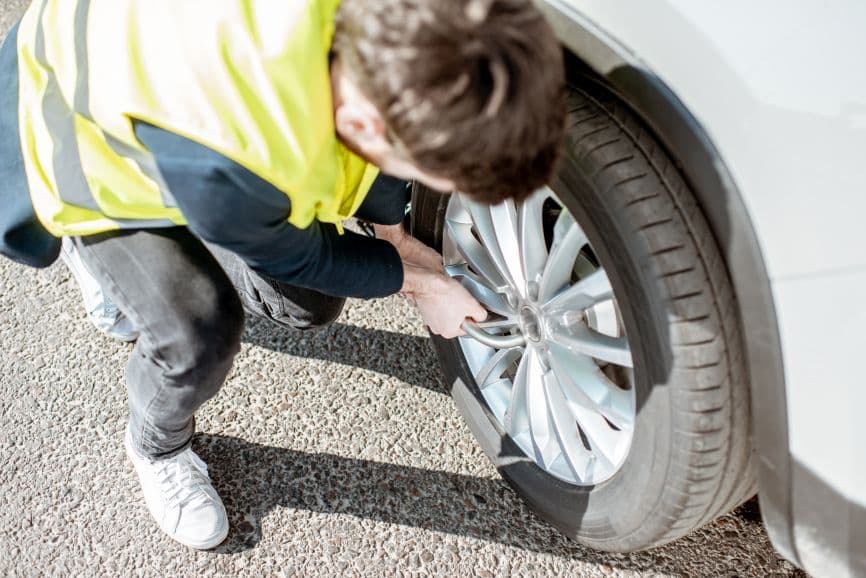 Nail in Your Tyre? When a Puncture Can Be Repaired and When It Can’tFound a nail in your tyre? When a puncture can be repaired under BS AU 159, when it can’t, whether you can drive on it, and why to leave the nail in.10 min read
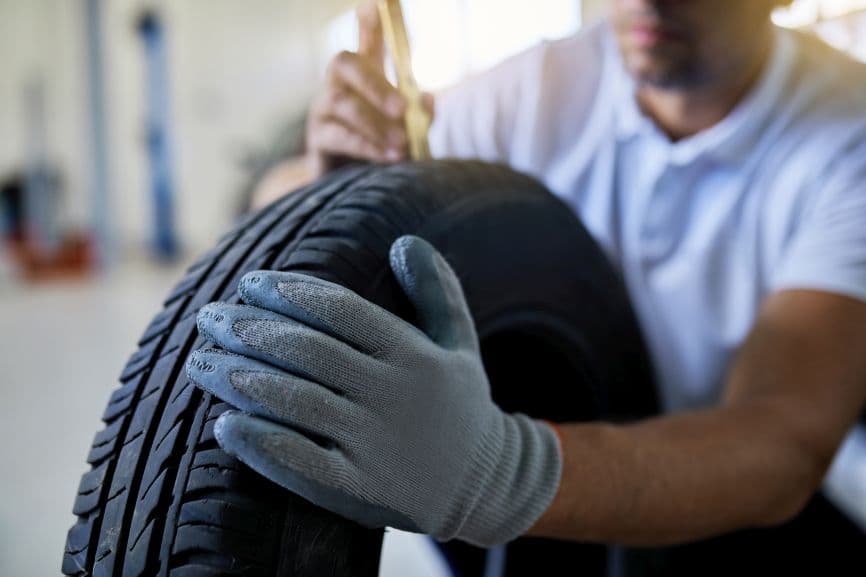 Tyre Tread Depth – The UK Legal Limit and When to Actually ReplaceThe UK legal tread limit is 1.6mm, but where is it measured? How to check your tyres, what 2mm to 5mm means, and why many replace at 3mm.12 min read
General guidance, not a diagnosis. If you're not sure your car is safe to drive, get it checked before you go anywhere. All guides